
The best storage solutions don’t look like storage. They look like furniture, architecture, and thoughtful design. They’re the ones where storage solutions have been built into the space rather than bolted onto it as an afterthought. Most homes have significantly more untapped storage capacity than their occupants realize, distributed across locations that get overlooked in conventional thinking about where things should go. Finding and activating that capacity is what separates a home that always feels cluttered from one that functions as well as it looks.
The Storage Solutions Hidden in Plain Sight
The storage potential most consistently overlooked is vertical space. Walls extend eight, nine, or ten feet high in most homes, and the area above eye level is almost universally underused. Storage solutions that go vertical add capacity without consuming floor area, making them particularly valuable in smaller homes where the floor plan is fixed. Floating shelves installed above standard furniture level create storage that doesn’t interrupt the flow of the room below. A row of floating shelves near the ceiling holds books, baskets, and seasonal items in a location that’s accessible but not in the daily visual field. Built-in storage that wraps around architectural features, such as shelving flanking a doorway, a window seat with drawer base, a fireplace surround with flanking cabinets, turns existing architectural elements into storage solutions that feel like they were always meant to be there. This approach uses space with no competing function and adds storage with minimal visual impact.
Furniture That Doubles as Storage
Dual-purpose furniture is the category of storage solutions that has the highest impact in rooms where adding shelving or built-ins isn’t practical, primarily bedrooms, living rooms, and dining spaces where floor space is at a premium. Bed frames with integrated drawer storage replace the dead zone beneath most beds, typically the largest unoccupied cubic footage in any bedroom, with organized, accessible storage for linens and seasonal clothing. Ottoman coffee tables with hinged lids, upholstered storage benches in entryways, dining room sideboards, and media consoles that combine component storage with display are all storage solutions that serve two functions without requiring additional space. The principle to apply is function first, the storage function should be genuinely useful. An ottoman opened twice a year isn’t contributing meaningfully; one that holds throw blankets, board games, or remote controls earns its dual function daily.
Storage Solutions for the Spaces Everyone Forgets
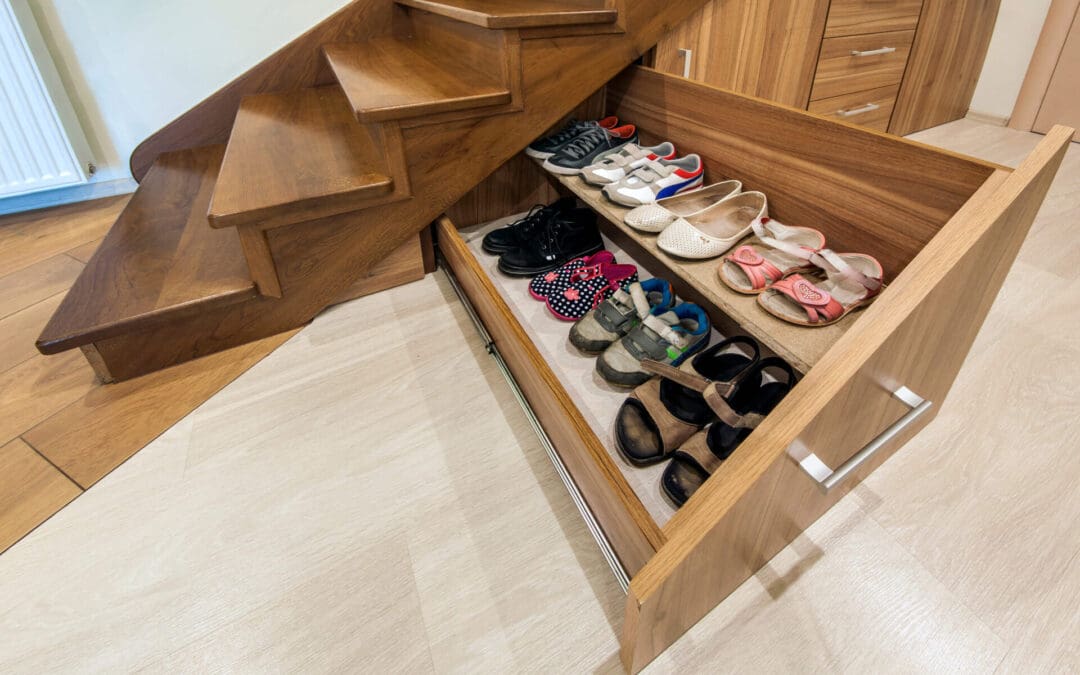
The most creative storage solutions often occupy locations that don’t register as storage opportunities at all, the zones between and around the furniture and architecture that define the room. The area under stairs is one of the most consistently wasted spaces in multi-level homes. Pull-out drawers built into stair risers, a built-in bookcase that fills the triangular space under the staircase, or a dedicated storage room accessed through a door cut into the stair wall all convert dead architectural space into functional storage solutions, at any level of investment. Toe kicks beneath kitchen cabinets, the recessed area at the base of the cabinet face, hide a narrow but real storage opportunity. Toe kick drawers on slides pull out to reveal storage for flat items like baking sheets and serving platters. The drawers are invisible when closed and add capacity without adding visual bulk.
Frequently Asked Questions (FAQs)
What are the most impactful storage solutions for a small home?
Vertical storage adds capacity without consuming floor area. Dual-purpose furniture adds storage at no incremental floor space cost. And editing ruthlessly, keeping only what’s used regularly, makes every other approach more effective. In a small home, the volume of what’s being stored matters as much as the sophistication of the system.
How do I make storage solutions look intentional rather than cluttered?
Consistency: consistent containers, materials, and a clear approach to what’s visible and what’s concealed. Open shelving that holds a curated collection with uniform baskets for smaller items looks designed. The same shelving crowded with a mix of object types and colors looks like overflow. Anything stored in open view should earn its place aesthetically as well as functionally.
What’s the best storage solution for a garage that’s become a catch-all?
A combination of vertical wall storage, such as pegboards, slatwall, or wall-mounted shelving, and overhead ceiling storage for seasonal items works best. The most important first step is removing everything and editing before any storage is installed. Once the volume is right-sized, wall-mounted tool and sports equipment storage, overhead platforms for bins, and floor-level heavy shelving for larger items produce a garage that maintains its organization.
Are built-in storage solutions worth the investment compared to freestanding furniture?
Built-ins consistently add more home value than equivalent freestanding furniture; they read as a permanent feature rather than a furnishing. For storage in architectural dead zones, such as under stairs, flanking a fireplace, or wrapping around a doorway, built-ins are almost always the better long-term investment because they use space a freestanding unit couldn’t access.
How do I find a contractor to build custom storage?
Custom storage can be executed by a general carpenter, finish carpenter, or custom cabinetry company depending on complexity. For painted built-ins with clean lines, a skilled general carpenter is usually the most cost-effective. For stained or high-finish cabinetry matching existing millwork, a finish carpenter or cabinetry company produces better results. Get at least two bids, ask to see similar completed work, and verify insurance and references before committing.
Five Stars Home Inspections offers home inspections and water quality testing to customers in the Greater Boston area. Contact us to request our services.